AI Video Ads vs UGC Creators: Maximizing ROAS in 2026
In 2026, small ecommerce brands face a critical choice between the rapid scalability of AI video ads and the authentic trust of UGC creators to maximize Return on Ad Spend (ROAS). This article breaks down the latest performance benchmarks, comparing production costs, click-through rates, and conversion efficiency. It ultimately reveals how to implement a high-performing hybrid strategy that leverages AI for rapid creative testing and human creators for scaling winning ad concepts.
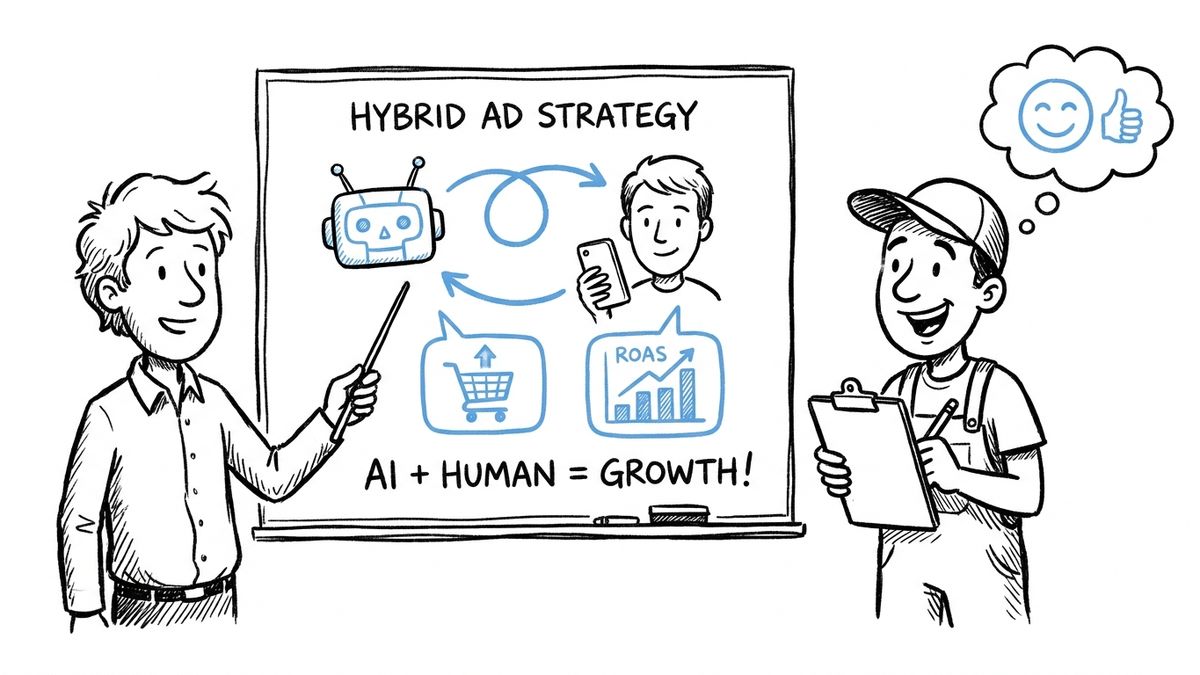
To maximize ROAS in 2026, brands must use AI video ads for rapid, low-cost creative testing and human UGC creators to scale proven, trust-building concepts.
Small ecommerce brands and dropshippers face a critical choice as customer acquisition costs continue to climb across major ad networks.
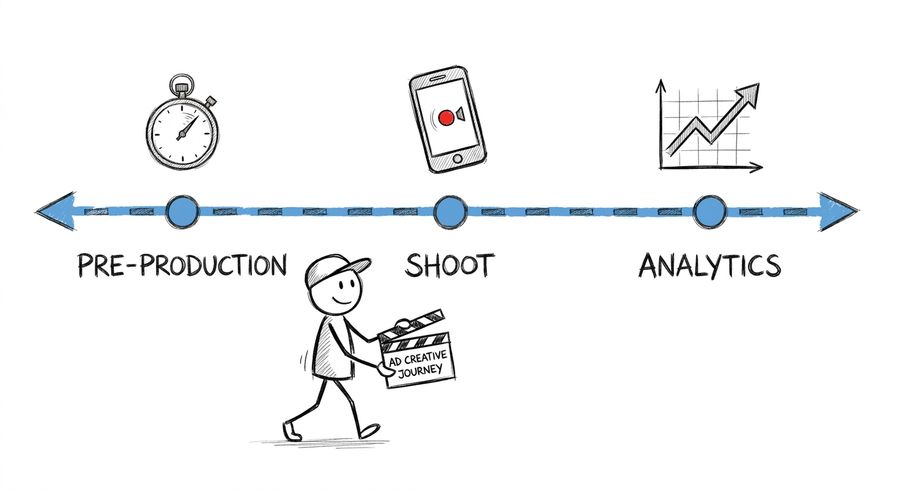
The digital advertising landscape demands an incredibly high volume of fresh creatives just to combat ad fatigue. Brands can either lean into the rapid scalability of artificial intelligence, or rely on the traditional, authentic trust of user-generated content. However, the most profitable approach is no longer a simple either-or scenario. Understanding how to leverage both tools synergistically is the ultimate key to unlocking unprecedented growth.
How Do the Cost and Speed of AI Video Ads Compare to Traditional UGC?
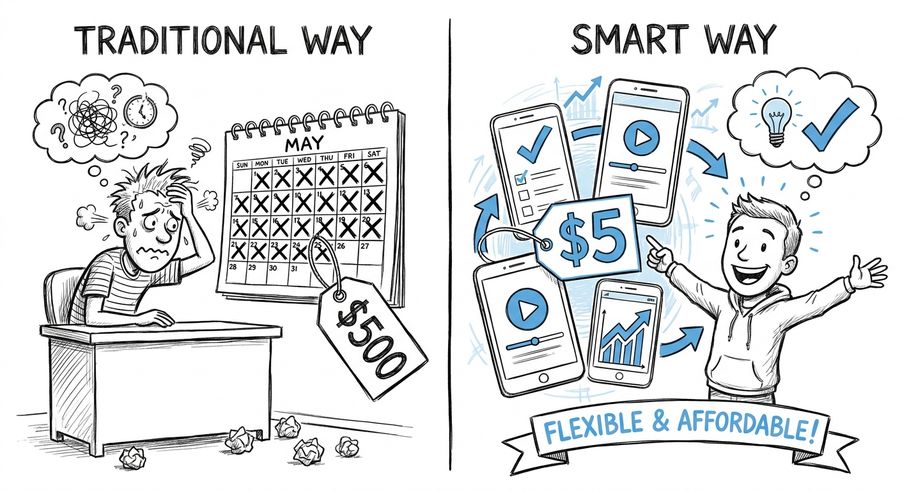
AI video ads offer unmatched cost efficiency, reducing creative testing expenses by up to 98% compared to traditional UGC. While traditional human-created UGC videos generally cost between $150 and $500 per asset, an AI UGC video costs between $5 and $30 to generate.
This dramatic reduction in production cost allows small brands to stretch their marketing budgets much further than before. Furthermore, turnaround times drop from several weeks to mere minutes. According to a recent Forbes report on digital advertising, brands utilizing AI generation tools can produce ten times the amount of video content without increasing their operational overhead. Speed to market is crucial when trends change daily, and AI provides the agility required to stay relevant.
What Are the 2026 Performance Benchmarks for CTR, CPA, and ROAS?
Recent 2026 data shows that AI UGC achieves up to 110% of the click-through rates of traditional UGC in fast-scrolling feeds. This increased engagement naturally leads to a significantly lower Cost Per Acquisition (CPA) during initial campaign launches.
Because AI platforms allow for rapid iteration of visuals, hooks, and scripts, social media algorithms are continuously fed fresh, highly optimized content. In fact, AI-generated UGC can drive up to 350% higher top-of-funnel engagement rates on TikTok by enabling rapid multi-variant testing. When marketers can test dozens of hooks simultaneously, they quickly identify the precise messaging that resonates with their target audience. This data-driven approach pushes Return on Ad Spend (ROAS) consistently higher.
Why Do AI Ads Dominate the Volume Testing Phase?
AI generation excels during the volume testing phase because it allows small brands to test dozens of hooks simultaneously without breaking the bank. Performance marketers know that the first three seconds of a video dictate its ultimate success or failure.
Producing fifty different hook variations with a human creator is logistically difficult and prohibitively expensive. AI video generators remove this friction entirely. Advertisers can easily swap backgrounds, change avatar voices, and modify text overlays with just a few clicks. As noted in HubSpot's 2026 Marketing Trends Report, agility in creative testing is now the number one driver of ad performance for small to medium businesses. Testing volume is no longer a luxury; it is a necessity.
Where Do Human Creators Still Dominate in the Marketing Funnel?
Human-generated UGC still leads in long-term brand trust and absolute conversion rates, particularly for hero products. Despite the incredible speed and efficiency of AI, human authenticity remains highly persuasive when consumers are at the bottom of the funnel.
Shoppers inherently want to see real people holding, wearing, or using physical products, especially when buying high-ticket items or personal care goods. Traditional human UGC delivers a 161% increase in absolute conversions when placed on product landing pages where trust is absolutely vital. Authentic imperfections—such as a messy living room, a genuine laugh, or a spontaneous reaction—create an emotional connection.
A comprehensive Wyzowl study emphasizes that while AI captures initial attention, human-driven video content is vastly superior at closing the sale by establishing deep brand credibility. Relying entirely on AI and completely abandoning human creators will likely harm your bottom-of-funnel conversion metrics.
How Can Brands Build a High-Performing Hybrid Strategy?
The highest ROAS comes from a hybrid strategy: using AI avatars to find winning angles, then deploying real creators to scale them. Instead of pitting AI against human creators, top-tier performance marketers in 2026 combine their strengths.
This hybrid workflow maximizes the advantages of both mediums while minimizing financial risk. Marketers can stop guessing what their audience wants and start letting hard data dictate their larger production budgets. According to recent Statista data, ecommerce brands utilizing hybrid creative workflows see a much higher lifetime return on their ad spend.
Here is how to effectively implement a successful hybrid strategy for your ecommerce brand:
- ✓Phase 1: Generate 20 to 30 AI video variations testing different visual hooks, emotional pain points, and product value propositions.
- ✓Phase 2: Run low-budget conversion campaigns to identify exactly which AI creatives yield the lowest CPA and highest engagement rates.
- ✓Phase 3: Take the top-performing scripts and winning hooks, then assign those specific concepts to human UGC creators.
- ✓Phase 4: Deploy the high-quality human UGC as your primary scaling creatives, placing them prominently on your core ads and landing pages.
Are You Ready to Scale Your Ad Creatives with AI?
Implementing a strategic hybrid video ad model is the most effective way to protect your budget while aggressively scaling your ecommerce brand in 2026. By leveraging AI for high-volume testing and human creators for authentic trust, you guarantee that every dollar spent is backed by data.
Lumafly is specifically designed to help small businesses bridge this exact gap and execute winning campaigns. As a premier AI video ad creation platform, Lumafly empowers you to generate stunning, high-converting video variations in mere minutes. Stop wasting your valuable ad spend on unproven concepts. Start testing smarter, scaling faster, and maximizing your ROAS with Lumafly today.
Frequently Asked Questions
Related Articles
All Articles
How AI Video Ads Drive Real Estate Listings in 2026
Discover how top real estate agents are leveraging AI video ads to dominate their local markets and secure more listings in 2026. This article explores the strategies, tools, and data-driven results behind automated video marketing, showing you how to turn static property links into high-converting campaigns. Learn how to cut production costs while generating high-quality buyer and seller leads at scale.
Read Article
Why AI Video Ads Are Your Competitors' Secret Weapon
AI is fundamentally changing the economics and production speed of video advertising in 2026. This article explores how competing brands use AI video tools to slash production costs, scale A/B testing, and deliver personalized campaigns at unprecedented speeds. Learn how early adopters are balancing automated volume with human creativity to gain a significant market advantage.
Read Article
AI Ads vs Agencies: Why Small Businesses Are Switching
Small businesses are increasingly dropping expensive marketing agency retainers in favor of AI-powered advertising tools. This shift allows founders to drastically reduce overhead costs while maintaining high-quality ad creatives and data-driven targeting. By bringing AI ads in-house, SMBs gain faster execution, round-the-clock optimization, and full control over their marketing campaigns.
Read Article
How to Run AI Video Ads on Meta & TikTok for Beginners
This beginner's guide breaks down how to leverage AI video generators to launch high-converting campaigns on Meta and TikTok without a massive production budget. It covers everything from utilizing native platform tools like TikTok Symphony and Meta Advantage+ to scripting the perfect three-second hook. By mastering these automated workflows, performance marketers and brands can drastically slash production costs while rapidly testing winning ad variations.
Read Article100% free · No account required
Try our free marketing tools
Spam checker, UTM builder, script timer, caption counters, and SEO previews. Handy while you plan your next campaign.
Ready to create?