Why AI Video Ads Are Your Competitors' Secret Weapon
AI is fundamentally changing the economics and production speed of video advertising in 2026. This article explores how competing brands use AI video tools to slash production costs, scale A/B testing, and deliver personalized campaigns at unprecedented speeds. Learn how early adopters are balancing automated volume with human creativity to gain a significant market advantage.
AI video ads give competitors a massive advantage by slashing production costs by up to 91% and accelerating creation time from weeks to under 30 minutes.
In the rapidly evolving landscape of 2026, the economics of digital advertising have fundamentally shifted. Traditional video production, once a major bottleneck for small to mid-sized businesses, is being replaced by agile, AI-driven workflows. Competing brands are no longer constrained by expensive agency retainers or lengthy shooting schedules. Instead, they are leveraging AI video tools to scale their ad creatives efficiently, allowing them to test faster, iterate instantly, and capture market share at an unprecedented rate.
How Are AI Generators Dropping Production Costs and Timelines?
AI tools dramatically reduce both the financial investment and the time required to create video ads, turning a process that used to take weeks into a 30-minute task.
For years, high-quality video advertising was a luxury reserved for enterprise brands with massive budgets. Today, AI has leveled the playing field. According to Wyzowl's State of Video Marketing report, AI-assisted production brings traditional video costs down by 91%, dropping from roughly $4,500 per minute to just $400 per minute. This incredible cost efficiency means smaller brands can now produce television-quality creatives on a fraction of their previous budget.
Furthermore, the speed of execution is staggering. As noted by Forbes, the average time to produce a 60-second marketing video has plummeted from 13 days to just 27 minutes using AI generation tools. This acceleration allows marketing directors to respond to trending topics and shift campaign messaging on the same day.
What Does the Traditional Video Workflow Look Like?
Historically, producing a single video required a complex web of logistics. You had to source an agency, negotiate retainers, draft storyboards, hire actors, scout locations, and schedule shoot days. After filming, the footage sat in post-production for weeks as editors added graphics, color correction, and sound design. This rigid workflow left very little room for error; if the final ad failed to convert, the entire investment was lost.
How Is the AI Workflow Different?
In stark contrast, AI video production operates on a radically accelerated timeline. Advertisers simply input a script or a text prompt, select their preferred visual styles, and let the AI generate the initial draft within minutes. This drop in time and cost comes from eliminating traditional production hurdles:
- ✓Removing the need for expensive physical sets, lighting crews, and camera operators.
- ✓Replacing lengthy post-production editing processes with automated, text-to-video generation.
- ✓Generating professional-grade voiceovers instantly without hiring voice actors or renting studios.
How Are Competitors Scaling A/B Testing Across Social Platforms?
Competitors use AI to rapidly generate dozens of ad variants, allowing them to test different hooks and continuously optimize for algorithmic success on platforms like Meta and TikTok.
Social media algorithms demand a high volume of fresh creative to prevent ad fatigue. In the past, testing a new hook meant reshooting or spending hours in an editing bay. Now, digital advertisers are using AI to instantly swap out opening hooks, background visuals, and calls to action. By feeding their winning concepts into an AI platform, they can multiply a single core idea into fifty variations in a single afternoon.
This high-volume approach means brands are no longer guessing what their audience wants. They launch micro-campaigns to let the data dictate the winner. Algorithms on TikTok and Instagram reward this level of creative diversity, resulting in lower customer acquisition costs and higher overall return on ad spend.
Which Variables Should You Test With AI Ads?
When you have the power to generate endless variations, knowing what to test becomes critical. Advertisers should focus on:
- ✓Visual Hooks: The first three seconds determine if a viewer keeps watching. Test different AI-generated actors, dynamic text overlays, or bold opening scenes.
- ✓Pacing and Length: Experiment with snappy 15-second TikTok formats versus longer, narrative-driven 60-second formats for YouTube Shorts.
- ✓Call-to-Action (CTA): Swap out AI voiceovers to test soft asks, like 'Learn More,' against urgent directives, such as 'Claim Your Discount Today.'
Why Does Hyper-Personalization Lead to Higher Engagement Rates?
AI-driven personalized videos resonate more deeply with specific audience segments, delivering tailored messaging that achieves significantly higher click-through rates than generic creatives.
Consumers are increasingly tuning out broad, one-size-fits-all advertisements. They expect brands to understand their specific pain points. Based on HubSpot's latest marketing trends report, personalized AI videos have shown a 49% higher click-through rate compared to standard, generic video ads. When a video speaks directly to a viewer's niche demographic or specific use case, it instantly captures attention.
AI tools enable this hyper-personalization at an unprecedented scale. A business owner can create one core marketing message and use AI to automatically adapt the script, the on-screen talent, and the visual context for ten different buyer personas. A SaaS company, for example, can instantly generate unique ad variations targeting healthcare providers, real estate agents, and retail managers—all from the exact same initial prompt.
How Does Niche Targeting Improve ROI?
When a digital ad feels custom-made for the viewer, trust is established almost instantly. By aligning specific AI-generated ad creatives with detailed targeting parameters on Meta and TikTok, businesses drastically reduce their cost-per-click. For instance, according to insights from Social Media Examiner, highly targeted, personalized ad sets yield stronger conversion rates. This happens because the relevance score on social platforms skyrockets, pushing the ad into cheaper auction tiers.
How Can Brands Balance Automation With Human Strategy?
The most successful brands combine the rapid execution of AI tools with careful human oversight to ensure strategic alignment, emotional resonance, and brand authenticity.
While AI video generators are incredibly powerful, they are not a complete replacement for human creativity. Relying entirely on automation without a guiding vision can lead to generic, disjointed content that lacks a true brand voice. The early adopters who currently dominate their respective markets treat AI as a co-pilot, not an autopilot.
Marketing directors play a crucial role in providing the right inputs. They dictate the strategic messaging, understand the deep psychological triggers of their audience, and ensure the final output strictly aligns with brand guidelines. The AI simply executes the heavy lifting of video production. This synergy between human empathy and machine efficiency is the ultimate secret weapon for modern advertisers.
Why Is Brand Authenticity Still Essential?
Even as production becomes increasingly automated, consumers still crave authentic connections with the brands they buy from. If an AI video feels too robotic or disconnected from a company's core values, it will fail to build long-term brand loyalty. Human marketers must curate the AI outputs, injecting the brand's unique tone of voice, empathy, and humor into the final cut. The goal is to use AI to enhance human storytelling, not to replace it completely.
How Can You Start Creating Better Video Ads With Lumafly?
Lumafly makes it effortless for small businesses to produce, test, and scale high-performing video ads without needing a massive budget or technical expertise.
Don't let your competitors monopolize the benefits of AI video production. Lumafly is the premier AI video ad creation platform designed specifically for brands looking to scale their creatives efficiently. Whether you need to slash your production costs, launch hyper-personalized campaigns, or generate dozens of A/B test variations in minutes, Lumafly provides the intuitive tools to make it happen. Step into the future of digital advertising and transform your marketing strategy today.
Frequently Asked Questions
Related Articles
All Articles
How AI Video Ads Drive Real Estate Listings in 2026
Discover how top real estate agents are leveraging AI video ads to dominate their local markets and secure more listings in 2026. This article explores the strategies, tools, and data-driven results behind automated video marketing, showing you how to turn static property links into high-converting campaigns. Learn how to cut production costs while generating high-quality buyer and seller leads at scale.
Read Article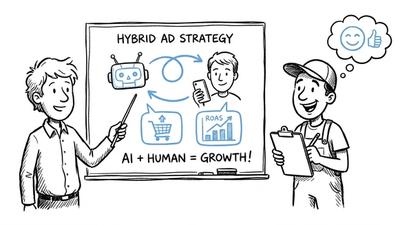
AI Video Ads vs UGC Creators: Maximizing ROAS in 2026
In 2026, small ecommerce brands face a critical choice between the rapid scalability of AI video ads and the authentic trust of UGC creators to maximize Return on Ad Spend (ROAS). This article breaks down the latest performance benchmarks, comparing production costs, click-through rates, and conversion efficiency. It ultimately reveals how to implement a high-performing hybrid strategy that leverages AI for rapid creative testing and human creators for scaling winning ad concepts.
Read Article
AI Ads vs Agencies: Why Small Businesses Are Switching
Small businesses are increasingly dropping expensive marketing agency retainers in favor of AI-powered advertising tools. This shift allows founders to drastically reduce overhead costs while maintaining high-quality ad creatives and data-driven targeting. By bringing AI ads in-house, SMBs gain faster execution, round-the-clock optimization, and full control over their marketing campaigns.
Read Article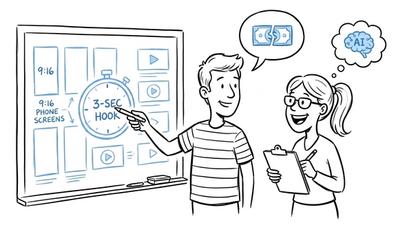
How to Run AI Video Ads on Meta & TikTok for Beginners
This beginner's guide breaks down how to leverage AI video generators to launch high-converting campaigns on Meta and TikTok without a massive production budget. It covers everything from utilizing native platform tools like TikTok Symphony and Meta Advantage+ to scripting the perfect three-second hook. By mastering these automated workflows, performance marketers and brands can drastically slash production costs while rapidly testing winning ad variations.
Read Article100% free · No account required
Try our free marketing tools
Spam checker, UTM builder, script timer, caption counters, and SEO previews. Handy while you plan your next campaign.
Ready to create?