AI Ads Guide: Do They Match Your Authentic Brand Voice?
This beginner-friendly guide explores how AI ads impact your brand's unique voice and authenticity. It helps marketers evaluate whether automated creative tools align with their company's core identity, balancing efficiency with human connection.
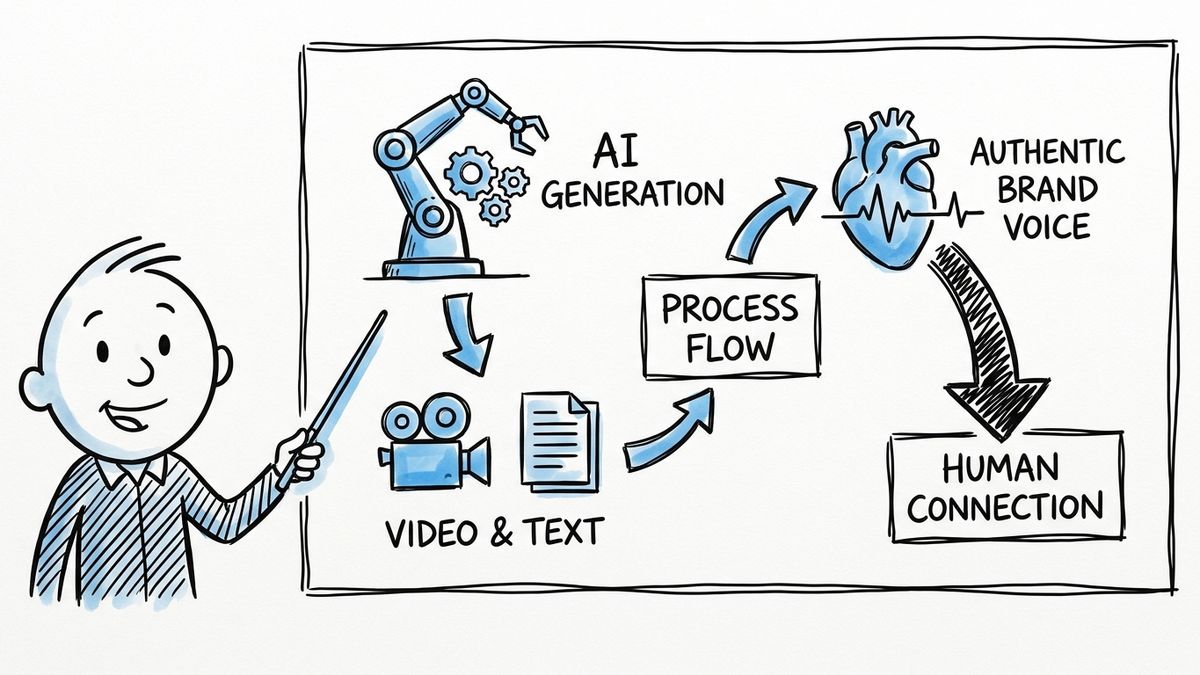
AI ads can perfectly match your authentic brand voice, but only if you actively train the tools on your identity and maintain a human editor.
Small business owners and digital marketers face a constant challenge: scaling ad campaigns without losing the human connection that built their brand.
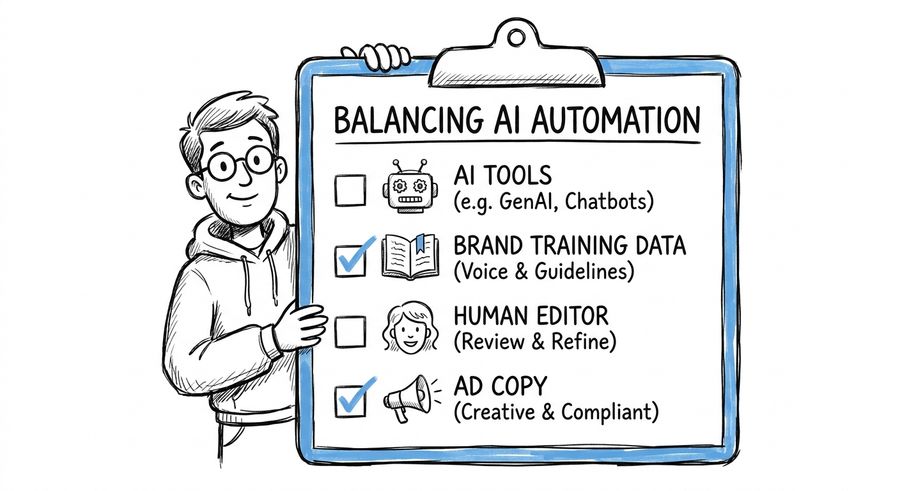
Generative AI offers incredible efficiency, allowing you to produce video and copy at unprecedented speeds. However, the fear of sounding robotic or generic holds many brand managers back. This beginner-friendly guide explores how you can leverage AI advertising tools while protecting your company's core identity.
What Are AI Ads and How Do They Actually Work?
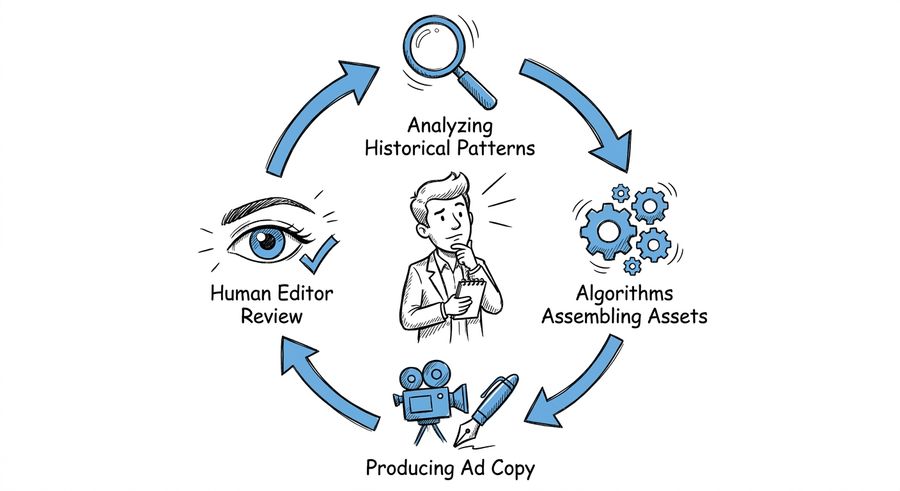
AI ads are marketing creatives generated by machine learning models that analyze vast amounts of data to predict what content performs best. These platforms use complex algorithms to assemble copy, images, and videos rapidly on demand.
Understanding the difference between AI-generated ad copy, video, and human-crafted content is the first step toward authentic automation. While human marketers rely on intuition, empathy, and cultural context to craft campaigns, AI platforms rely on historical patterns. They scrape existing successful ads to assemble new assets based on mathematical probability. This means AI excels at structural formatting and rapid ideation but lacks the genuine lived experience of a human creator. Recognizing this distinction ensures you use AI as a powerful creative assistant rather than a complete replacement for your marketing team.
What Are The Pros and Cons of AI for Brand Authenticity?
The biggest advantage of AI advertising is unmatched production speed and scale, while the primary drawback is the risk of producing soulless, generic content that alienates your audience.
The shift toward automated marketing is accelerating rapidly. According to Zipdo data, AI advertising revenue is projected to reach $107 billion globally by 2028, reflecting massive industry adoption across businesses of all sizes.
Agencies are also pivoting quickly to keep up with client demands. In fact, a recent BCG report indicates that 45% of top marketing agencies are already utilizing generative AI for their creative production processes.
But speed comes with significant authenticity risks. Fully automating your ad creatives without oversight often results in a robotic tone that customers can easily detect. A separate Zipdo study found that 69% of consumers say they feel manipulated when brands use AI for advertising without proper disclosure. For small businesses, losing brand authenticity is a fast track to losing customer trust entirely.
How Can You Maintain Your Brand Voice Using AI Tools?
You can protect your brand identity by thoroughly training AI models on your unique style guidelines and adopting a hybrid workflow.
To prevent automated tools from diluting your message, you must properly train AI advertising models on your specific brand guidelines. Instead of relying on generic default prompts, feed the AI your historical top-performing ads, lists of negative keywords, and explicit tone instructions. Tell the system exactly who your target audience is and what specific emotions you want to evoke. The more context the machine has, the less robotic its output will be.
The most successful brand managers rely on best practices for a hybrid approach: using AI for rapid ideation and drafting while keeping a human editor for the final polish. Consider these actionable steps:
- ✓Define your core values and tone (e.g., playful, authoritative, empathetic) before writing a single AI prompt.
- ✓Upload past successful marketing campaigns as reference material for the tool to analyze.
- ✓Always have a human reviewer tweak the emotional hooks and remove awkward phrasing.
- ✓A/B test AI-assisted creatives against fully human-crafted ones to track audience sentiment.
Which Key Indicators Show Your Brand Is Ready for AI Advertising?
Your brand is ready for AI ads if you have established clear editorial guidelines and need to scale your output rapidly without expanding your internal team.
Deciding to integrate AI into your marketing strategy requires a close look at your current goals. If you are struggling to keep up with the constant content demands of multiple social platforms, AI can bridge the gap. Here are key indicators to help you decide if AI ads fit your current marketing goals:
- ✓Do you have a documented brand voice guide that an AI model can easily digest?
- ✓Are you running out of time for creative ideation and missing posting schedules?
- ✓Is there a dedicated team member available to act as an AI editor and quality controller?
- ✓Do your current marketing goals prioritize scaling across new ad channels over perfect manual precision?
How Can Lumafly Help You Scale Authentically?
Lumafly empowers small businesses to generate high-performing AI video ads that are custom-tuned to reflect their true brand voice, balancing scale with genuine human connection.
Scaling your advertising output does not mean you have to sacrifice the unique identity you worked so hard to build. With Lumafly, you can leverage cutting-edge generative AI to automate your video ad creation while keeping full control over the creative direction. Our platform is built specifically for small businesses that demand both efficiency and authenticity. Start creating high-converting ads that sound exactly like you, just significantly faster.
Frequently Asked Questions
Related Articles
All Articles
How AI Video Ads Drive Real Estate Listings in 2026
Discover how top real estate agents are leveraging AI video ads to dominate their local markets and secure more listings in 2026. This article explores the strategies, tools, and data-driven results behind automated video marketing, showing you how to turn static property links into high-converting campaigns. Learn how to cut production costs while generating high-quality buyer and seller leads at scale.
Read Article
Why AI Video Ads Are Your Competitors' Secret Weapon
AI is fundamentally changing the economics and production speed of video advertising in 2026. This article explores how competing brands use AI video tools to slash production costs, scale A/B testing, and deliver personalized campaigns at unprecedented speeds. Learn how early adopters are balancing automated volume with human creativity to gain a significant market advantage.
Read Article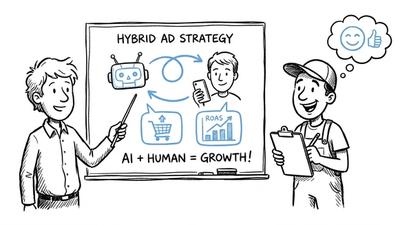
AI Video Ads vs UGC Creators: Maximizing ROAS in 2026
In 2026, small ecommerce brands face a critical choice between the rapid scalability of AI video ads and the authentic trust of UGC creators to maximize Return on Ad Spend (ROAS). This article breaks down the latest performance benchmarks, comparing production costs, click-through rates, and conversion efficiency. It ultimately reveals how to implement a high-performing hybrid strategy that leverages AI for rapid creative testing and human creators for scaling winning ad concepts.
Read Article
AI Ads vs Agencies: Why Small Businesses Are Switching
Small businesses are increasingly dropping expensive marketing agency retainers in favor of AI-powered advertising tools. This shift allows founders to drastically reduce overhead costs while maintaining high-quality ad creatives and data-driven targeting. By bringing AI ads in-house, SMBs gain faster execution, round-the-clock optimization, and full control over their marketing campaigns.
Read Article100% free · No account required
Try our free marketing tools
Spam checker, UTM builder, script timer, caption counters, and SEO previews. Handy while you plan your next campaign.
Ready to create?